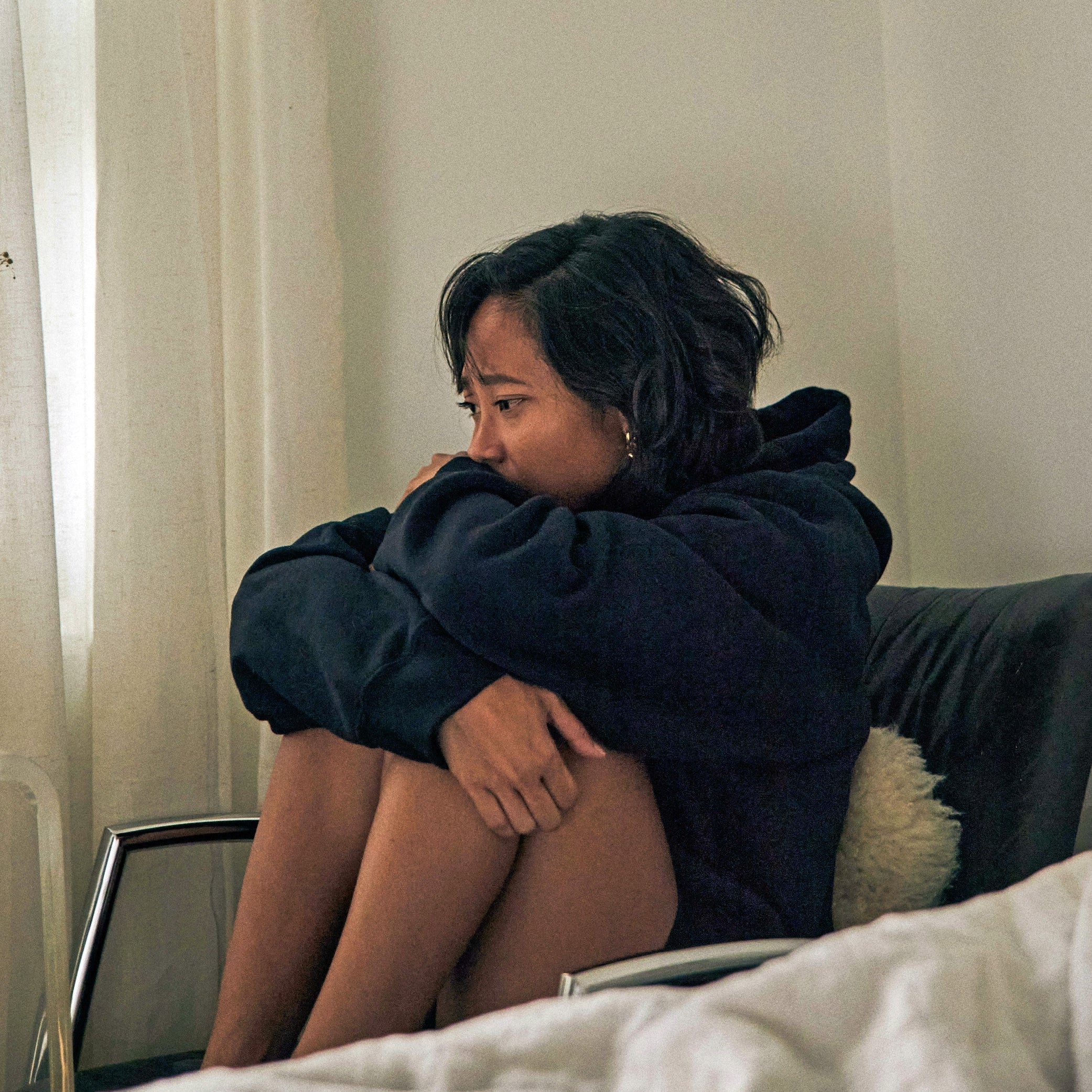
Cancel the plans. Wear the comfy clothes. Order the takeaway. Say "not today." Cry at the ad if you need to. Consider this your permission slip, signed and dated, because rest is not something you have to earn.
We say that so casually, and yet almost none of us believe it. Most of us treat rest like a reward we have not quite qualified for. If the list is done, if everyone else is sorted, if we have been "productive enough", then maybe we can sit down. The list, of course, is never done.
First, a quick word on the luteal phase
Your cycle has phases, and the one that tends to catch us off guard is the luteal phase: the roughly one to two weeks between ovulation and your period.1 For a lot of women this is when energy dips, mood can wobble, sleep gets patchier and the same to-do list suddenly feels heavier than it did a fortnight ago.
This is not weakness, and it is not you failing at being a person. It is a natural shift in a natural cycle, and your body is quietly asking for a slightly different pace. It is allowed to ask. You are allowed to listen.
None of this means every luteal phase is difficult, or that something is wrong if yours is not. Some cycles are barely noticeable. Others land with a thud. Learning your own pattern, and planning a little softness into the days you tend to feel it, can take a surprising amount of pressure off before the fortnight even begins.
Why we are so bad at resting
Here is the uncomfortable bit. In a 2024 US survey, 63% of women said it is hard to make their own health a priority, rising to 75% of mothers with children at home, and the number one barrier was not time or money. It was simply feeling overwhelmed.2 We are, as a group, extraordinarily good at looking after everyone else and last in our own queue.
And it is not as though periods ask politely for space. In Australia's largest menstruation survey, more than half of respondents said they had missed work because of their period.3 Our cycles genuinely take it out of us. Pretending otherwise does not make us tougher. It just means we run on empty and call it coping.
Part of it is the mental load, the invisible project management of everyone else's lives that tends to quietly land on women. Part of it is a culture that treats busyness as a personality and rest as laziness. And part of it is simply never having been told that your body runs on a cycle rather than a straight line, so planning for the dips is sensible, not self-indulgent.
The reframe: self-care is not indulgence, and rest is not a prize for productivity. It is maintenance. You would never call putting petrol in the car "treating yourself." Same energy.
The gentle, non-diet-culture checklist
This is not about optimising yourself into a machine or earning your rest with a perfect routine. It is about working with your cycle instead of against it:
- Prioritise sleep. It is the foundation everything else sits on.
- Eat food that actually satisfies you, and eat enough of it (yes, including the chocolate).
- Stay hydrated. Dull, but it genuinely helps the headaches and the fog.
- Move gently. A walk counts, a stretch counts, and a rest day counts too.
- Hand something back. Cancel the non-essential thing. Let "good enough" be good enough.
- Protect a little time for whatever refills your cup rather than empties it.
Notice what is missing from that list? Guilt. There is no line item for deserving any of it.
And you do not have to do all of it. Pick two things that feel genuinely doable this cycle and let the rest go. Self-care that turns into another checklist to fail is not self-care, it is just more homework, and you have quite enough of that already.
Come and find your people (The Angry Uterus Club)
Rest is easier when you are not the only one giving yourself permission. The Angry Uterus Club is our Facebook community, hosted by Umi, our (surprisingly cheerful) uterus mascot, where your sisters come together to share experiences, thoughts and advice, swap the small things that actually help, vent about the hard days, and remind each other that slowing down is allowed.
All topics and all kinds of uterus owners are welcome. It is a genuine safe space, with a few simple guidelines so everyone feels comfortable being honest, and you might just make a few real friends along the way. Come and say hi.
One more thing, and then go rest
If low mood, pain or exhaustion is severe, or it is getting in the way of your life most months, that is worth taking to your GP. Track it for a cycle or two so you have the full picture to share.
For everything else: what is one thing on your list this week you could hand back, cancel, or let be "good enough"? Start there. Save this for your next luteal phase, and send it to a sister who needs the permission more than the checklist.
Frequently asked questions
What is the luteal phase?
It is the part of your cycle between ovulation and your period, usually about one to two weeks. Many women notice lower energy, mood changes and needing more rest during it.
Why do I feel more tired before my period?
Natural hormonal shifts in the luteal phase can affect energy, mood and sleep. It is common, and it is not a sign you are not coping.
Is resting before my period actually necessary?
Rest is not something you have to justify. Working with your energy rather than against it can make the whole month feel more manageable.
What does luteal-phase self-care look like?
Prioritising sleep, nourishing food, hydration, gentle movement, handing back non-essential tasks, and protecting time for yourself, all without guilt.
When should I see a doctor?
If low mood, pain or exhaustion is severe or regularly disrupts your life, speak with your GP, ideally with a cycle or two of notes.
Where can I find support from other women?
Come and join The Angry Uterus Club, our Facebook community led by Umi, our uterus mascot. It is a safe space to share, ask and be supported. All welcome.
References
-
Jean Hailes for Women’s Health - The menstrual cycle and its phases (incl. luteal phase). https://www.jeanhailes.org.au/health-a-z/periods/menstrual-cycle
-
“Majority of U.S. Women Struggle to Prioritize Health,” Gallup, April 2024 (US; 4,001 women). https://news.gallup.com/poll/646529/majority-women-struggle-prioritize-health.aspx
-
Share the Dignity, Bloody Big Survey 2024 (Australia; over half of respondents missed work because of their period). https://www.sharethedignity.org.au/end-period-poverty/bloody-big-survey-2024